The welding of aluminum alloy frames is a typical "material-driven process", with the core difficulty lying in overcoming the high thermal conductivity of aluminum and the oxide film. The current mainstream process mainly focuses on TIG welding (argon arc welding), and is combined with strict heat treatment (T4/T6) to restore strength.
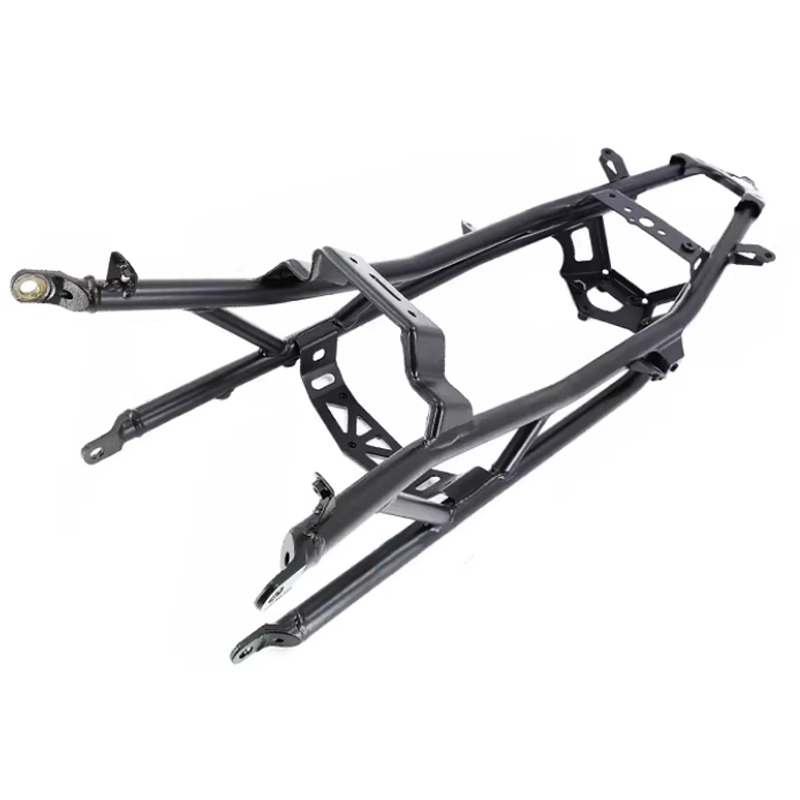
1. Core welding process: TIG welding is the absolute mainstream
For frame structures of bicycles, motorcycles, etc. that have high requirements for strength and appearance, TIG welding (tungsten inert gas shielded welding) is the preferred method, while MIG welding is only used for large-scale or low-end batch production.
| Technology / Process |
Applicable scenarios |
Advantages |
Disadvantages |
| TIG welding |
High-end/customized frame, thin-walled tubes (1-2mm) |
Aesthetically pleasing welds, small heat-affected zone, high strength, controllable |
Low efficiency, extremely demanding on welder skills |
| MIG welding |
Mass production of electric vehicle frames, shared bikes, etc. |
High efficiency (fast wire feeding), low cost |
The weld seams are rough and the heat input is high, which can easily lead to deformation.
|
| Laser welding |
A few top brands (automated production lines) |
Extremely precise, with minimal deformation |
Expensive equipment, demanding strict requirements for joint accuracy |
Key parameters (TIG welding reference):
Current type: AC TIG must be used. The cathode fragmentation effect is utilized to remove the oxide film (Al₂O₃) on the aluminum surface.
Gas protection: Pure argon gas (Ar), with a purity of ≥ 99.99%, and the flow rate is usually 12 - 18 L/min.
Wire selection: Common choices are ER5356 (with good versatility) or ER4043 (with good fluidity, suitable for repair welding).
2. Standard Manufacturing Process (SOP)
Materials and Pre-treatment
·Material selection: The mainstream options are 6061 (with good overall performance) or 7005 (with higher strength).
·Cleaning: The oil stains and oxide films must be thoroughly removed (through mechanical grinding or chemical cleaning) otherwise the weld seams are highly prone to developing pores.
Workwear and spot welding
Use special fixtures (Jigs) to fix the pipe materials and ensure the geometric accuracy.
First, perform spot welding (Tack Weld) to ensure the frame does not twist during the welding process.
Welding execution
Adopt the "low current, fast wire cutting" strategy to avoid overheating.
Control the interlayer temperature (typically < 100℃) to prevent the formation of coarse grains.
Post-processing (the key to determining lifespan)
Heat treatment (T4/T6): Welding will significantly weaken the age-hardening state of the aluminum material (the annealing effect). A solution treatment + artificial aging (T6 treatment) must be carried out to restore and enhance the strength and hardness of the frame. The strength of the weld joint without heat treatment is only 1/2 or even 1/5 of the base material.
Straightening: After heat treatment, there is usually deformation, which requires either cold straightening or hot straightening.
Surface treatment: Anodizing is a standard feature, which not only enhances the appearance but also increases the surface hardness and corrosion resistance.
3. Common Defects and Pitfall Avoidance Guide
| Defect |
Cause Solution |
Gas pores |
| Gas pores |
Insufficient cleaning of the oxide film and inadequate gas protection |
Strengthen the pre-weld cleaning and check the gas path sealing |
| Thermal cracks |
Excessive heat input, high material impurities |
Control the current and select high-quality welding wire (low Fe and Si content) |
| Severe deformation |
High thermal expansion coefficient and unreasonable restraint |
Optimize the fixture design and adopt symmetrical welding sequence |
| Insufficient strength |
No T6 heat treatment was carried out |
Overall heat treatment must be performed, which is the most easily overlooked fatal point |
4.Special Tips for DIY and Maintenance
If you plan to repair the aluminum frame (such as cracked tubes) by yourself:
Equipment Requirements: Ordinary electric welders (MMA) cannot weld aluminum frames; a welder with AC TIG function is necessary.
Heat Treatment Challenges: After DIY welding, the entire T6 heat treatment cannot be carried out, resulting in the weld seam area becoming a "weak point". Therefore, DIY repairs are usually only suitable for non-load-bearing areas or temporary emergencies; for load-bearing areas (such as vertical pipes, lower pipes), it is strongly recommended to send them to a professional factory for processing.
5.Process Comparison: Aluminum vs Steel
| Dimension |
Aluminum alloy frame |
Steel frame |
| Welding difficulty |
High (requires AC TIG, prone to oxidation) |
Low (ordinary arc welding is sufficient) |
| Heat treatment |
Must (enhanced T6 treatment) |
Usually not necessary (or only requires stress relief annealing) |
| Failure mode |
Fatigue fracture (brittle) |
Usually starts with bending deformation |
| Repairability |
Poor (irreversible heat treatment) |
Good (repeated soldering possible) |
Summary: The core of the aluminum alloy frame manufacturing process lies in "TIG welding + T6 heat treatment". Welding is merely "connection", while heat treatment is the essence that "bestows strength". For mass-produced frames, robot TIG welding combined with an automated heat treatment furnace is the key to ensuring batch consistency.
.jpg)
|